10 Best AI Recruiting Tools in 2026 (Compared + Pricing)
The best AI recruiting tools in 2026 include AI recruitment software and AI HR tools that automate resume screening, interviews, and structured shortlisting, but only a few significantly reduce real hiring cycle time.
We evaluated 34 AI recruiting and talent acquisition platforms based on real hiring workflows, not vendor claims, to identify which tools genuinely remove waiting from the recruitment funnel.
The strongest AI hiring software in 2026 includes AiPersy (real-time parallel shortlisting), Workable (structured ATS hiring), Greenhouse (process-heavy environments), HireVue (enterprise interviewing), and Humanly (high-volume engagement).
These tools report time-to-hire reductions ranging from 25% to 85%. However, the impact depends on whether the platform removes sequential evaluation steps or simply automates isolated tasks.
Many HR and talent acquisition teams evaluating AI recruiting tools struggle to determine which platforms accelerate decisions versus those that only speed up communication.
This guide compares the 10 best AI recruiting and HR tools with pricing, implementation timelines, and the specific hiring bottlenecks each platform is designed to remove.
| AI Recruiting Tool Name | Best For | Starting Price | Time-to-Hire Reduction |
| AiPersy | Parallel shortlisting | Custom | Up to 85% |
| Workable | Structured ATS hiring | $299/month | 30-50% |
| Greenhouse | Process-heavy organizations | Custom | 25-40% |
| HireVue | Enterprise interviewing | Custom | Custom |
| Humanly | High-volume engagement | $35,000+/year | 30-45% |
Best AI Tools for HR Teams in 2026
HR teams evaluating AI tools often prioritize different outcomes than recruiting specialists. While recruiting teams focus on resume volume and interview coordination, HR leaders typically assess AI HR tools based on compliance visibility, evaluation consistency, reporting clarity, and governance control.
The best AI tools for HR teams in 2026 are not necessarily the ones with the most automation features. They are the platforms that integrate cleanly into existing HR software systems, maintain structured decision logic, and support auditability without increasing manual review.
For HR-driven environments:
- AiPersy is designed for HR teams seeking faster, threshold-based shortlisting without adding interview delays.
- Greenhouse is strong for process-heavy organizations where governance and structured scorecards matter.
- Workable works well for HR teams that want AI layered inside a familiar ATS workflow.
- Humanly supports high-volume HR environments focused on engagement and communication consistency.
When evaluating AI HR tools, the central question is not how many tasks the platform automates. The real question is whether the system improves hiring decisions while preserving oversight and reducing rework.
For HR teams managing multi-department hiring, global compliance standards, or structured evaluation frameworks, AI hiring tools must provide transparency and explainability, not just speed.
In 2026, the strongest AI tools for HR teams are those that reduce hiring bottlenecks without compromising governance.
What is an AI Recruiter Tool?
AI recruiter tools use Artificial Intelligence, Machine Learning, and Natural Language Processing to simplify the recruitment workflow by automating tasks like candidate sourcing, resume screening, interview scheduling, and early-stage candidate engagement.
These AI-driven recruitment tools reduce repetitive back-and-forth work for recruiters, minimize bias by learning from the hiring criteria and context provided to the AI engine, and improve candidate experience through faster responses, structured evaluations, and transparent communication at every step.
Our Evaluation Criteria to Rate the Best AI Recruiter Tool
Most AI recruiter tools look impressive in controlled demos. The difference only becomes clear once they are deployed inside a live hiring workflow.
To separate tools that genuinely accelerate hiring from those that simply automate tasks, we evaluated AI hiring platforms against the failure points HR teams repeatedly encounter in practice.
Each criterion below reflects how senior hiring teams should assess AI recruiter tools before committing to one.
Does the Tool Shorten the Path to a Real Shortlist?
Observed failure: Many AI recruiter tools focus heavily on resume screening and stop there.
Why it slows hiring: Recruiting teams already spend an average of 23 hours per role reviewing resumes, while 75–88% of applicants are unqualified.
AI may reduce this initial effort, but interviews and evaluations still progress one step at a time. The overall hiring timeline barely improves.
What a strong tool must do instead: Prioritize AI interviewer tools that help you reach a shortlist earlier in the process, not just cleaner resume stacks.
Strong systems reduce dependency on sequential interviews and manual coordination in early stages, so evaluation momentum is not lost after screening.
Can Hiring Teams Trust the AI’s Output Without Rechecking It?
Observed failure: Candidate scores and rankings are generated without clear reasoning or context.
Why it slows hiring: When recruiters cannot confidently explain why a candidate was advanced or rejected, they re-evaluate results manually.
This trust gap is one reason only 14% of organizations fully utilize AI recruitment tools, even after adopting them.
What to look for instead: Look for tools that make their evaluation logic understandable to recruiters.
When teams can trust the reasoning, they move candidates forward faster instead of reopening decisions.
Does Automation Improve Candidate Flow, Not Just Response Speed?
Observed failure: AI automates communication but creates fragmented or inconsistent candidate experiences.
Why it slows hiring: 65% of candidates report inconsistent communication, and 82% lose trust in employers because of it. Drop-offs force recruiters to restart conversations or backfill pipelines, extending time-to-hire.
What to look for instead: Strong tools maintain clear, predictable candidate progression. The goal is not faster messages, but fewer stalled candidates and fewer follow-ups needed to keep pipelines moving.
Does the Tool Fit Naturally Into Existing Hiring Systems?
Observed failure: AI recruiter tools struggle to integrate cleanly with ATS and HR systems.
Why it slows hiring: Integration gaps create duplicate data entry and broken workflows. Many teams abandon AI pilots because using the tool adds steps rather than removing them.
What to look for instead: Favor tools that operate within your existing hiring stack. Screening, interviews, and evaluations should feel like one continuous process, not disconnected systems.
Are Bias Controls Enforced in Practice, Not Just in Marketing?
Observed failure: Bias reduction is claimed, but decision logic remains opaque or overly reliant on historical data.
Why it slows hiring: Well-known failures, such as Amazon’s discontinued AI recruiting system, have made teams cautious.
Extra layers of human review are added to compensate, slowing down hiring decisions and increasing recruiter workload.
What to look for instead: Strong tools anchor evaluations to explicit, role-based criteria and allow oversight without pushing teams back into manual screening.
Does the Tool Help Teams Decide Earlier, Not Just Work Faster?
Observed failure: Most AI recruiter tools automate tasks but leave decision-making unchanged.
Why it slows hiring: Teams remain busy while decisions still wait on meetings, reviews, or availability. Only 11% of organizations have successfully implemented AI across multiple business areas, reflecting this limitation.
What to look for instead: Evaluate whether the tool helps hiring teams reach confident decisions earlier in the funnel, not just complete tasks more efficiently.
Does Performance Hold Up When Hiring Volume Spikes?
Observed failure: AI recruiting tools perform well in demos but degrade under real applicant volume.
Why it slows hiring: When systems struggle at scale, recruiters revert to manual shortcuts. Consistency drops, and delays reappear.
What to look for instead: Experienced talent acquisition teams prioritize AI hiring tools that maintain evaluation quality and speed even during application surges, not just under ideal conditions.
Each AI recruiter tool in this guide was assessed against these exact decision points. Platforms that optimized one stage while introducing friction elsewhere were excluded.
The tools that remain are those that consistently reduce waiting, support faster decisions, and hold up under real hiring pressure.
Which AI Hiring Software Is Most Accurate and Least Biased?
When HR teams search for the most accurate AI hiring software, they are usually asking two related questions:
Can we trust the system’s evaluation logic?
Does the tool reduce bias instead of amplifying it?
Accuracy in AI recruiting tools does not mean perfect prediction. It means the system evaluates candidates against clearly defined, role-specific criteria rather than vague historical patterns.
Many AI hiring platforms claim bias reduction in marketing materials.
However, bias control depends on how evaluation thresholds are configured, how transparent the scoring logic is, and whether human oversight is preserved at key decision points.
AI recruiting tools are more likely to be trusted by HR teams when they:
- Use explicit, role-based qualification criteria
- Allow recruiters to review structured evidence
- Avoid opaque ranking systems
- Provide explainable reasoning for advancement or rejection
Hiring software that relies heavily on historical hiring data without transparency can introduce hidden bias.
In contrast, tools that anchor evaluation to predefined skill requirements and structured interview logic reduce subjective variation and screening rework.
The most accurate AI hiring software in 2026 will not be the platform that promises flawless automation. It will be the one that makes evaluation logic visible, auditable, and aligned with job-specific requirements.
For HR teams prioritizing fairness and defensibility, transparency matters more than speed alone.
Revealing Best AI Recruiter Tools for HR Teams in 2026
We evaluated thirty-four of the most credible AI recruitment platforms using a research framework shaped by real HR workflows.
Our goal was to separate polished marketing promises from the capabilities that actually move the needle.
Thus, here is an evidence-based guide curated for recruiting leaders who need clarity, not complexity, as they redesign their hiring workflows for 2026 and beyond.
#1. AiPersy: Best for instant, parallel shortlisting without interview waiting
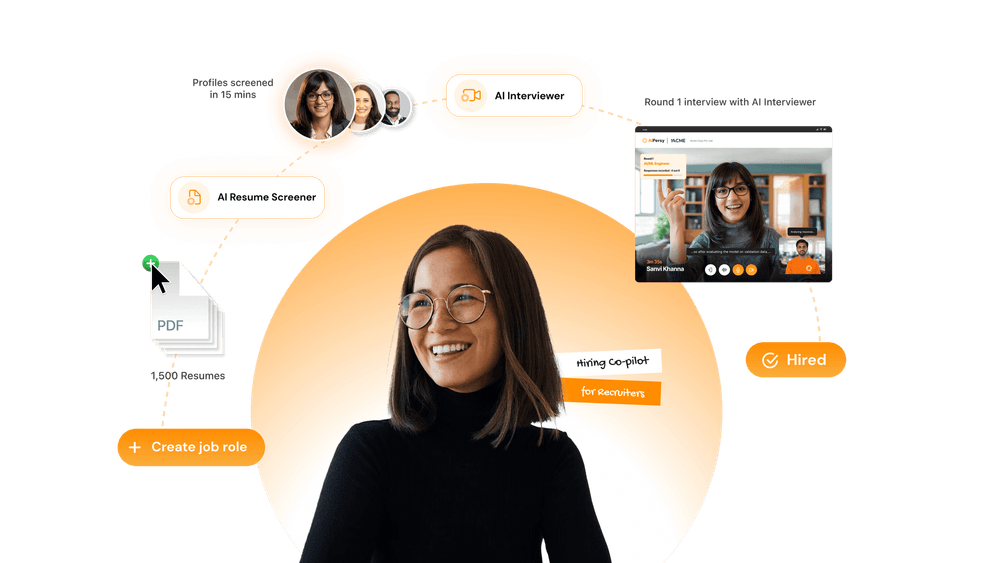
Best for: HR teams hiring at volume where candidates stall between resume screening, first interviews, and early evaluations.
Observed strength in real hiring workflows: AiPersy restructures how evaluation happens. Instead of resumes being reviewed first, interviews being scheduled later, and scoring happening after availability aligns, AiPersy evaluates candidates in parallel the moment they enter the funnel.
Resumes are assessed against role-defined criteria while candidates complete structured AI-led interviews asynchronously.
Scoring and evidence are produced together, not step by step. As a result, recruiters review shortlists instead of queues, and decisions happen without waiting for calendars, panels, or first-round interviews.
Here's how this affects recruiters: Recruiters stop spending time coordinating early interviews and rechecking resumes after each stage. Hiring managers see structured evidence earlier. Shortlists are reached while interest is still high, not after momentum is lost.
Pricing: Suitable for teams evaluating next-gen hiring workflows early. Pricing expected to be role- and volume-based at launch. Click here for early access.
Verdict: AiPersy is not just an optimization layer. It is a replacement for sequential evaluation in recruitment.
Because if hiring slows down after applications arrive, this is where the system must change.
#2. Workable: Best for structured hiring inside a familiar ATS
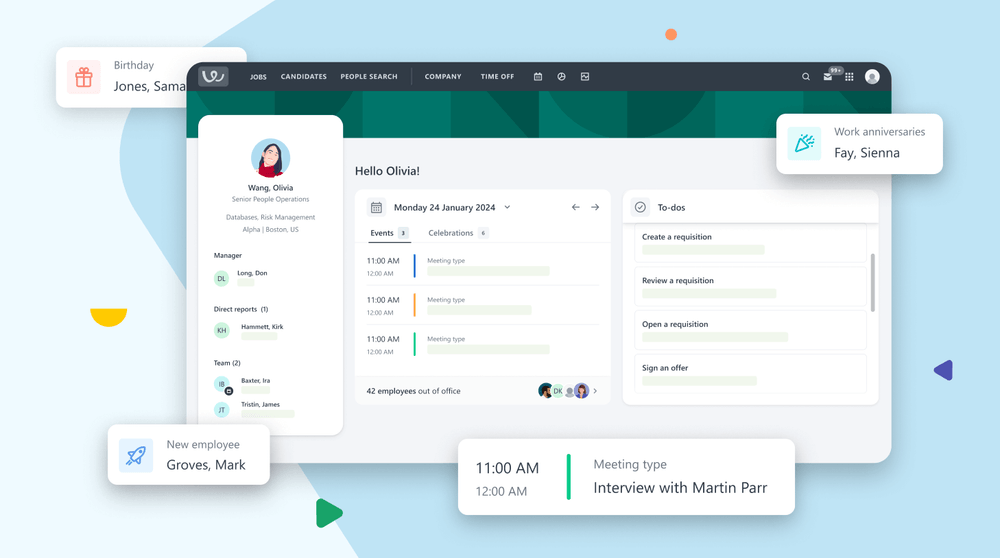
Best for: TA teams that want AI assistance without changing how their ATS-driven process works.
Observed strength in real hiring workflows: Workable brings AI ranking and sourcing into a well-understood ATS flow. Recruiters can prioritize candidates faster than manual screening and manage the entire pipeline in one place.
Where teams still slow down: Interviewing and decision-making remain sequential. AI helps rank resumes, but shortlisting still waits on human availability.
Pricing: Standard plan starts at $299/month; Premier plan at $599/month (both include recruiting + HR features)
Verdict: A strong choice for teams optimizing an existing ATS process. Not ideal if speed depends on removing interviews or parallelizing evaluation.
#3. Greenhouse: Best for controlled, process-heavy hiring environments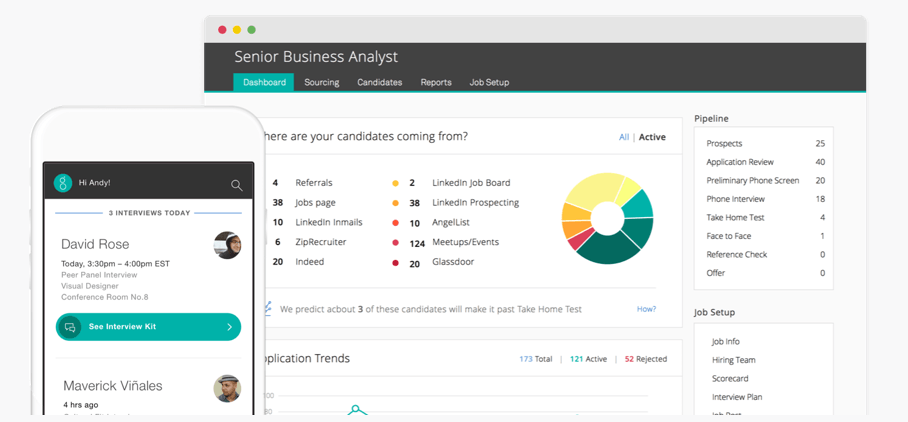
Best for: Mid-to-large organizations that value consistency, governance, and structured decision-making.
Observed strength in real hiring workflows: Greenhouse excels at enforcing hiring discipline.
Scorecards, workflows, and approvals are clearly defined, which improves consistency across teams.
Where teams still slow down: Process control often adds steps. AI assists content and coordination, but evaluation still moves stage by stage.
Pricing: Custom pricing (Core, Plus, and Pro plans based on company size and hiring needs; visit their website for a quote)
Verdict: Choose Greenhouse if consistency and compliance matter more than raw speed. Not built for teams trying to compress hiring cycles aggressively.
#4. HireVue: Best for enterprise-scale interviewing with oversight
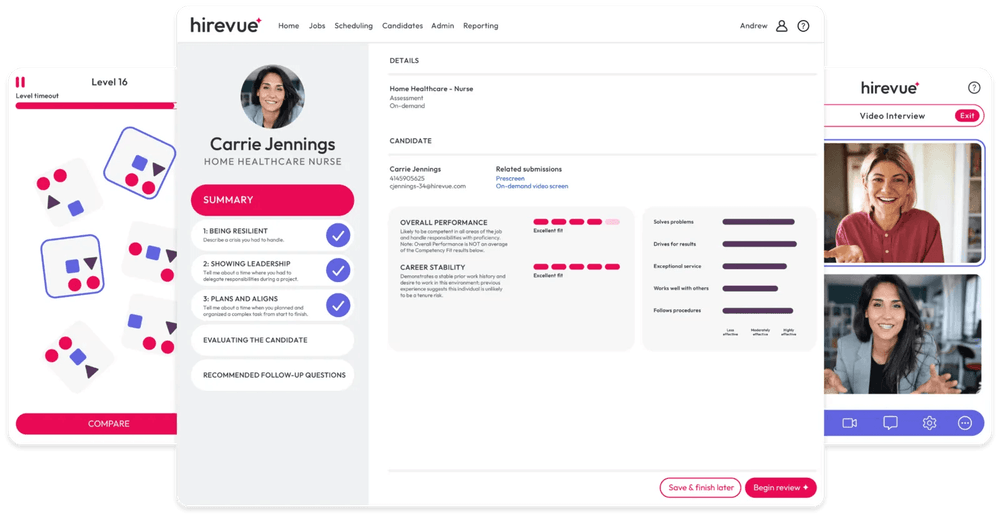
Best for: Enterprises handling large applicant volumes that rely heavily on interviews.
Observed strength in real hiring workflows: HireVue standardizes interviews at scale and reduces scheduling overhead. Candidates can be screened without live interviewer involvement.
Where teams still slow down: Interview review and decision-making still require human time. Shortlists wait on reviewers, not systems.
Pricing: Custom pricing across Essential, Enterprise, and Premium tiers (contact for quote)
Verdict: Effective when interviews are unavoidable. Less effective when the goal is to bypass interviews entirely.
#5. Humanly: Best for candidate engagement at high volume
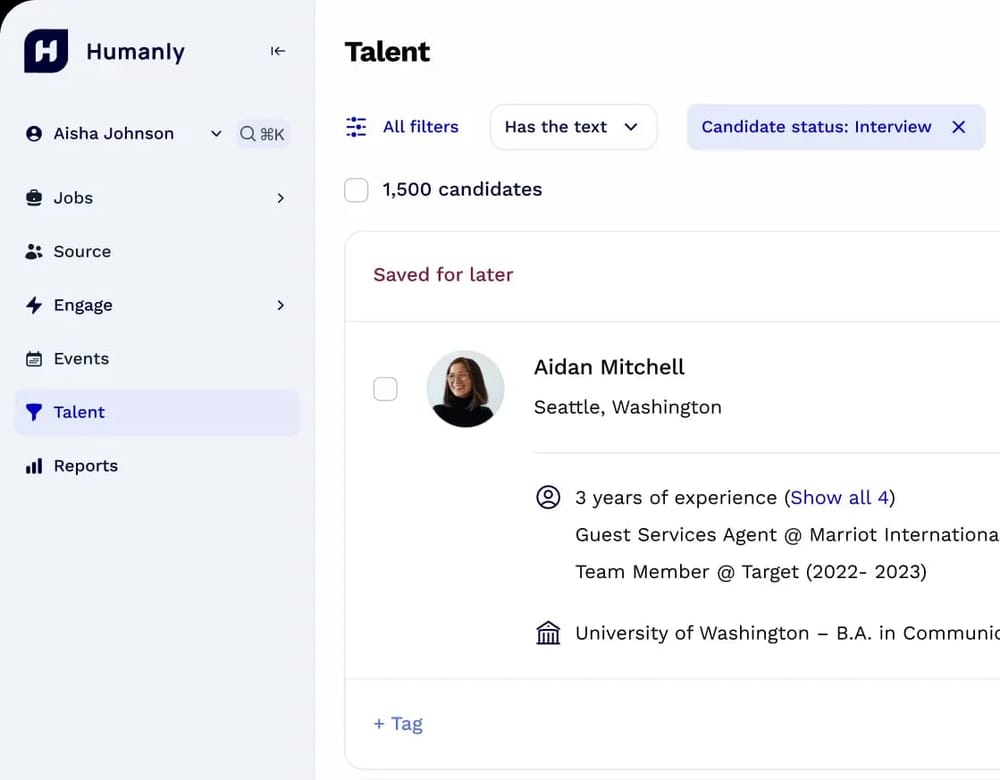
Best for: High-volume hiring teams struggling with candidate drop-offs and communication delays.
Observed strength in real hiring workflows: Humanly improves responsiveness. Candidates get timely messages, scheduling is automated, and engagement stays high.
Where teams still slow down: Engagement does not equal evaluation. Screening and shortlisting still depend on downstream processes.
Pricing: Custom enterprise pricing (estimated $35,000+ annually for mid-sized to large organizations)
Verdict: Useful when candidate experience is the bottleneck. Not a solution for slow evaluation or decision cycles.
#6. SeekOut: Best for sourcing hard-to-find talent
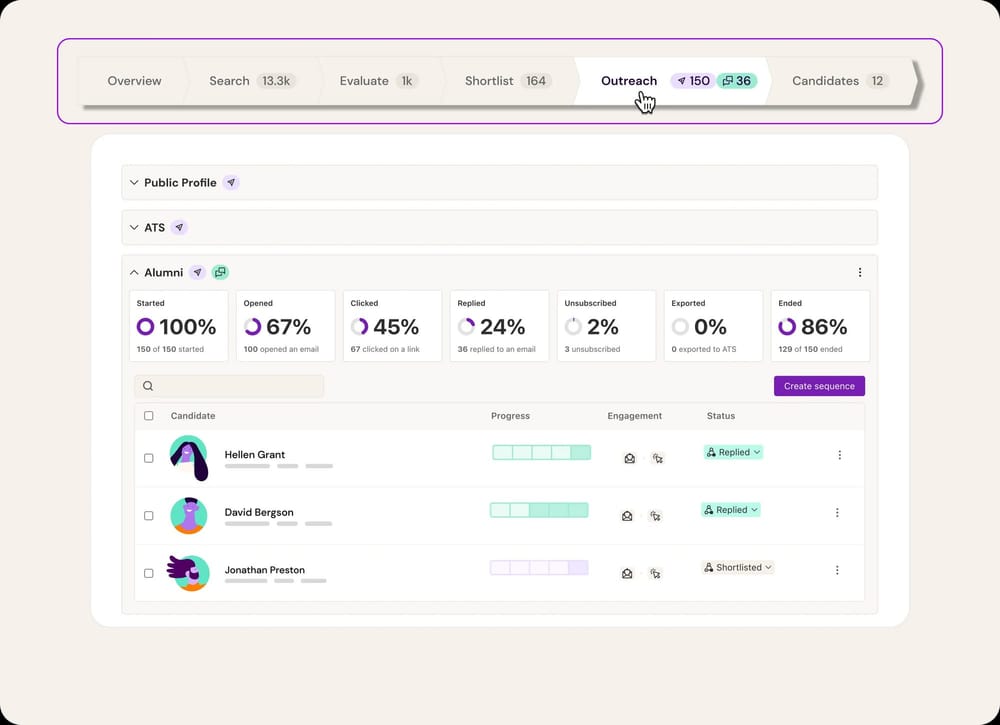
Best for: TA Teams hiring for niche or underrepresented roles where discovery is the main challenge.
Observed strength in real hiring workflows: SeekOut expands the top of the funnel with strong sourcing and filtering capabilities.
Where teams still slow down: Once candidates are sourced, evaluation and interviewing revert to traditional workflows.
Pricing: Professional plan starts at $500–$1,250/month; Enterprise plans $1,200–$2,500+/month (average annual cost ~$27,000)
Verdict: Powerful sourcing engine. Pair with a faster evaluation system if speed matters after discovery.
#7. Pinpoint: Best for customizable workflows and screening logic
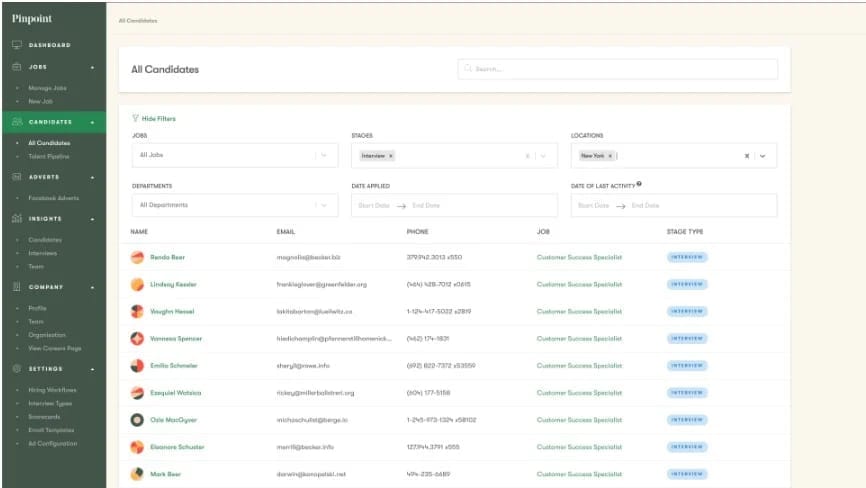
Best for: In-house recruiting teams that want flexibility without building systems from scratch.
Observed strength in real hiring workflows: Pinpoint allows teams to tailor workflows, automate screening steps, and manage candidates efficiently.
Where teams still slow down: Customization does not remove waiting. Interviews and approvals still gate progress.
Pricing: Custom quote-based pricing (tailored to company size and hiring complexity; visit their website for demo and quote)
Verdict: Good for teams refining their process. Not designed to eliminate sequential evaluation.
#8. Manatal: Best budget-friendly AI ATS for SMBs
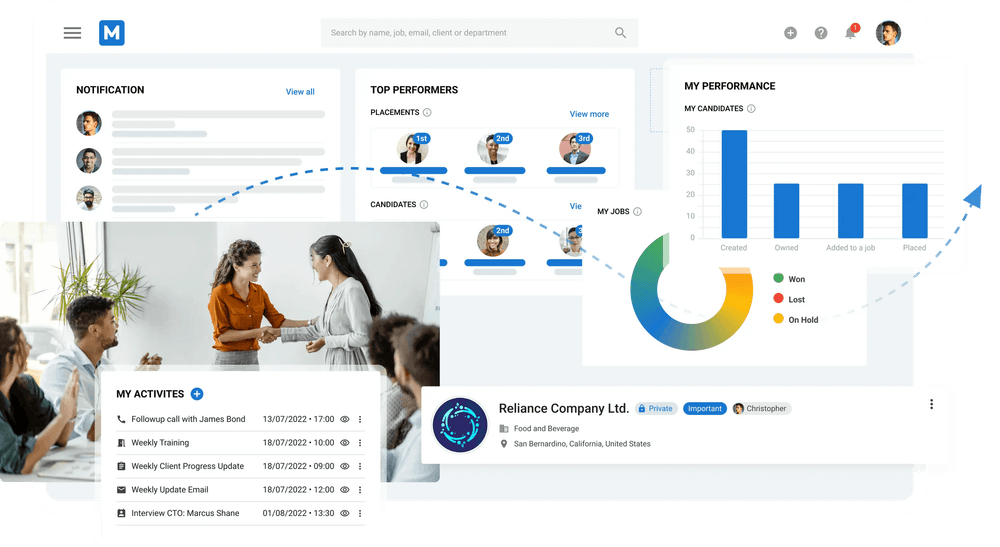
Best for: Small and mid-sized teams that need basic AI assistance without enterprise pricing.
Observed strength in real hiring workflows: Manatal improves resume screening and sourcing efficiency at a low cost.
Where teams still slow down: AI helps prioritize candidates, but hiring still depends on manual interviews and decisions.
Pricing: Professional $15/user/month, Enterprise $35/user/month, Enterprise Plus $55/user/month (billed annually)
Verdict: Solid entry-level option. Not suited for teams facing scale-driven delays.
#9. Fetcher: Best for outbound sourcing and automated outreach
Best for: Hiring teams investing heavily in proactive sourcing.
Observed strength in real hiring workflows: Fetcher delivers curated candidate lists and runs outreach campaigns efficiently.
Where teams still slow down: Evaluation starts only after candidates respond. Speed depends on response rates, not system design.
Pricing: Growth plan $379/month, Amplify plan $649/month (save 30% with annual billing)
Verdict: Effective for pipeline generation. Not an end-to-end hiring accelerator.
#10. Recruit CRM: Best for agencies and email-driven workflows
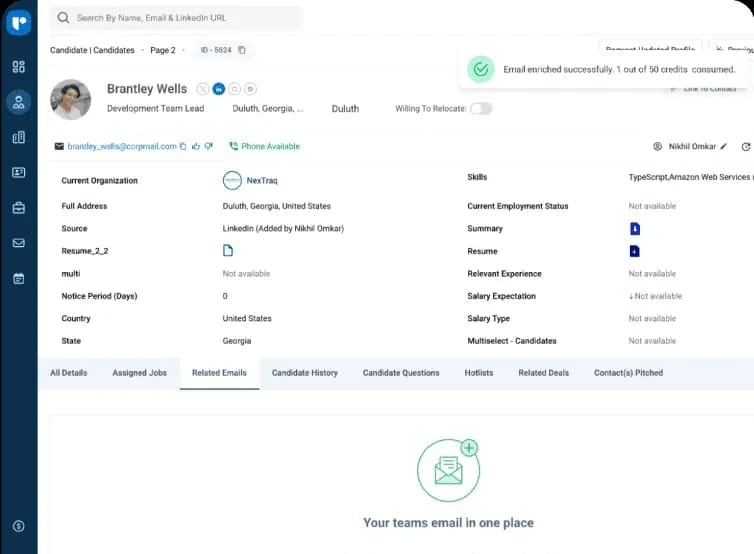
Best for: Recruitment agencies managing candidates and clients simultaneously.
Observed strength in real hiring workflows: Recruit CRM automates follow-ups, candidate communication, and record management.
Where teams still slow down: Designed for agency sales motion, not internal hiring compression.
Pricing: Pro ₹2,599/user/month, Business ₹3,999/user/month, Enterprise ₹8,333/user/month (billed yearly; save up to 20%)
Verdict: Strong agency tool. Limited relevance for in-house HR teams focused on speed.
What These AI Recruiting Tools Actually Help With (When Implemented Well)
Across different platforms, AI recruiter tools tend to deliver value in four practical ways, but only when they are implemented against the right bottleneck.
- Earlier shortlists: Strong tools reduce resume screening backlog and surface qualified candidates sooner, especially in high-volume roles.
- More consistent early evaluation: Structured screening reduces random variation caused by fatigue, gut feel, or rushed reviews.
- Lower coordination overhead: Automation cuts scheduling, follow-ups, and candidate status management.
- Shorter vacancy time: When screening and early evaluation accelerate, roles close faster, and cost-per-hire drops.
What matters is where the tool removes waiting. If it only speeds up tasks but leaves decisions sequential, overall hiring speed barely changes.
Questions to Ask Before Purchasing an AI Recruiting Tool
Buying an AI recruiting tool is easy. Making sure it actually improves hiring after deployment is not.
Most tools look convincing in demos. Problems surface only when real candidates, real volume, and real accountability enter the workflow. These questions are designed to help you surface those problems before you commit.
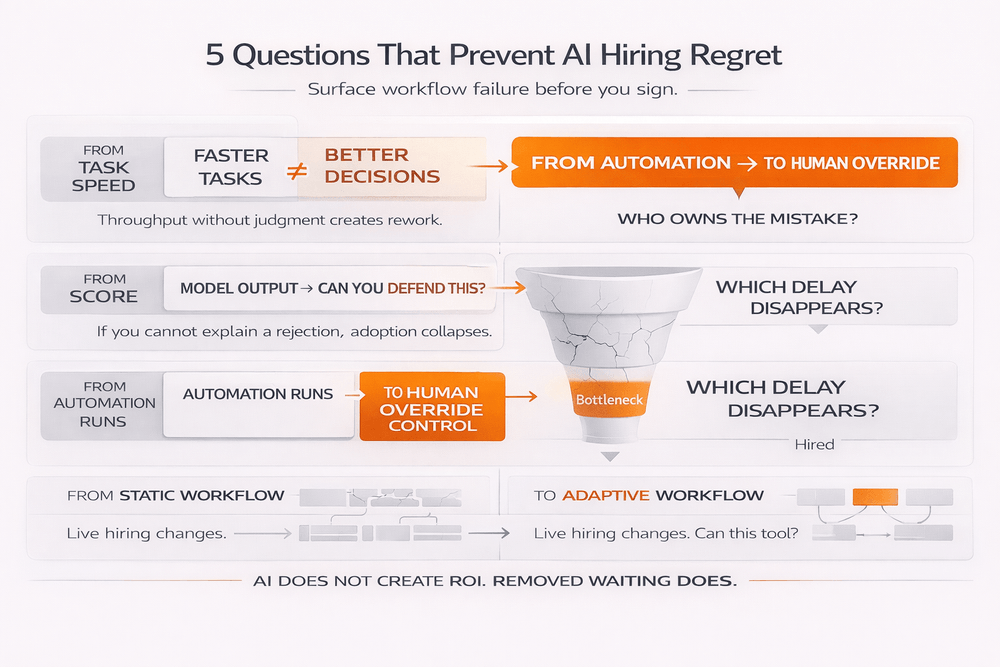
Does This Tool Improve Hiring Decisions, or Just Make Tasks Faster?
Many AI tools focus on speed. They generate job descriptions, summarize resumes, or automate scheduling. That saves time on individual tasks, but it does not guarantee better hiring outcomes.
Teams often discover that faster screening simply means they reach the same uncertain decisions sooner. Cleanup work follows. Candidates are revisited. Interviews repeat. Confidence drops.
High-performing teams look for tools that improve decision quality, not just throughput. The real test is whether the tool helps recruiters decide who to move forward earlier, with less second-guessing later.
If speed increases but judgment does not, time-to-hire rarely improves end-to-end.
Can we audit and explain AI-driven decisions in plain language?
At some point, someone will ask why a candidate was rejected or advanced. That might be a hiring manager, legal, leadership, or the candidate.
Many AI tools cannot explain their output clearly. When recruiters cannot trace why a decision happened, they reopen evaluations manually. This is where the trust erodes and adoption drops.
Strong teams ask vendors to walk through a real rejection, not a polished example. They want to see what matched, what did not, and where the evidence came from.
You do not need technical depth. You need explanations you can defend without guessing.
What happens when the AI is wrong, and who controls that moment?
In the hiring sector, some AI actions are low risk. Drafting outreach messages or suggesting sourcing leads can tolerate occasional errors.
Hiring decisions are different. Rejections, rankings, and salary-related recommendations carry legal, ethical, and trust implications. At scale, small errors compound quickly.
Teams should understand where human oversight applies and where automation runs independently. They should also know how overrides work when outcomes have real consequences.
If a vendor cannot clearly explain how mistakes are handled in live hiring, that gap usually surfaces later, when the stakes are higher and the timelines are tighter.
Which hiring bottleneck does this tool actually remove?
ROI in hiring does not come from features in a certain recruitment tool. It comes from reducing waiting.
Before purchasing, teams should identify the specific delay the tool is meant to eliminate. Resume screening backlog. Interview coordination. Early evaluation. Decision handoffs.
If the answer is vague, adoption stalls. Recruiters stay busy, but hiring speed does not change.
High-performing teams choose AI recruiting tools that shorten the path to a shortlist. They do not optimize isolated tasks while leaving the main bottleneck untouched.
Will this tool remain reliable when volume and requirements change?
Nowadays, hiring conditions rarely stay stable. Application volume fluctuates. Role requirements change mid-cycle. Evaluation criteria get refined while candidates are already in the pipeline.
Tools that depend on rigid workflows or slow reconfiguration add friction at exactly the wrong moment. Many AI pilots fail here, not because the technology is weak, but because it cannot adapt fast enough.
Talent acquisition teams should assess how easily workflows and criteria can be adjusted without disrupting live hiring. Responsiveness during real hiring matters more than sophistication in demos.
Final Words
Hiring does not slow down because talent acquisition teams lack AI-powered recruiting tools.
It slows down because candidate evaluation still waits on sequential hiring steps and human availability inside a recruitment funnel.
This guide has shown that many AI recruiter tools focus on making individual tasks faster. Resume screening improves. Messages go out quicker. Scheduling becomes easier.
However, if evaluation and decisions still move one stage at a time, overall hiring speed barely changes.
The difference between tools that help and tools that disappoint comes down to where they remove waiting.
Some improve sourcing. Others improve engagement. A smaller number changes how early teams can reach confident shortlists without waiting on interviews, reviews, or coordination.
In 2026, the strongest hiring teams will not be the ones using the most AI features.
They will be the ones who redesign their hiring flow so decisions happen earlier, with clarity, and at scale.
When choosing an AI recruiter tool, the question is not how advanced the technology sounds.
The real question is whether it helps your team stop waiting in the parts of the recruitment funnel that matter most for your organization. That is the difference between being busy and actually moving faster.